Key takeaways
- Near office for most of West County: Tesson Ferry, (314) 530-5480, off 270 south. O'Fallon and Hazelwood back it up.
- All offices close 12 to 2. Call in the morning or after two and say it is a crash exam.
- The first visit should produce dated findings, a diagnosis if supported, a written plan, and a straight answer about referrals.
- Bring the story, your symptoms with dates, anything already on paper, and an attorney's contact if you already have one.
The desk keeps this file short on adjectives and long on logistics, because the person reading it is usually doing so with a stiff neck and a phone in one hand. Here is the dispatch: the numbers, the routes, the hours, what to bring, what to say, and what the office should hand you back.
Numbers
The near office for most of West County is Missouri Injury Clinic's South County office at 11144 Tesson Ferry Road, Suite 200, Saint Louis, MO 63123, phone (314) 530-5480. The Lake St. Louis office in O'Fallon is at 2163 West Terra Lane, O'Fallon, MO 63366, phone (636) 280-0990. The North County office is at 14 Village Square Shop Ctr, Hazelwood, MO 63042, phone (314) 627-1411.
Say it is a crash exam when you call, say when the crash was, and take the first slot you can drive to. The offices file has the three offices side by side.
Routes
From Des Peres, Manchester, or Ballwin, 270 south to the Tesson Ferry exit is the direct line to the South County office. From the 141 corridor, 141 to 44 to 270 south does the same. Readers at the Chesterfield and Wildwood end of the county may find the O'Fallon office over the Boone Bridge an equal drive, and Hazelwood covers anyone already north on 270. Check the drive on a map before you commit; the office you can actually reach this week is the right office.
Hours
Tesson Ferry and Hazelwood: Monday through Thursday 9 to 6, Friday 9 to 12. O'Fallon: Monday, Tuesday, and Thursday 9 to 6, Wednesday and Friday by appointment. All three offices close from 12 to 2 every day. Call in the morning or after two; a call at 12:30 reaches a closed office.
What the first visit actually is
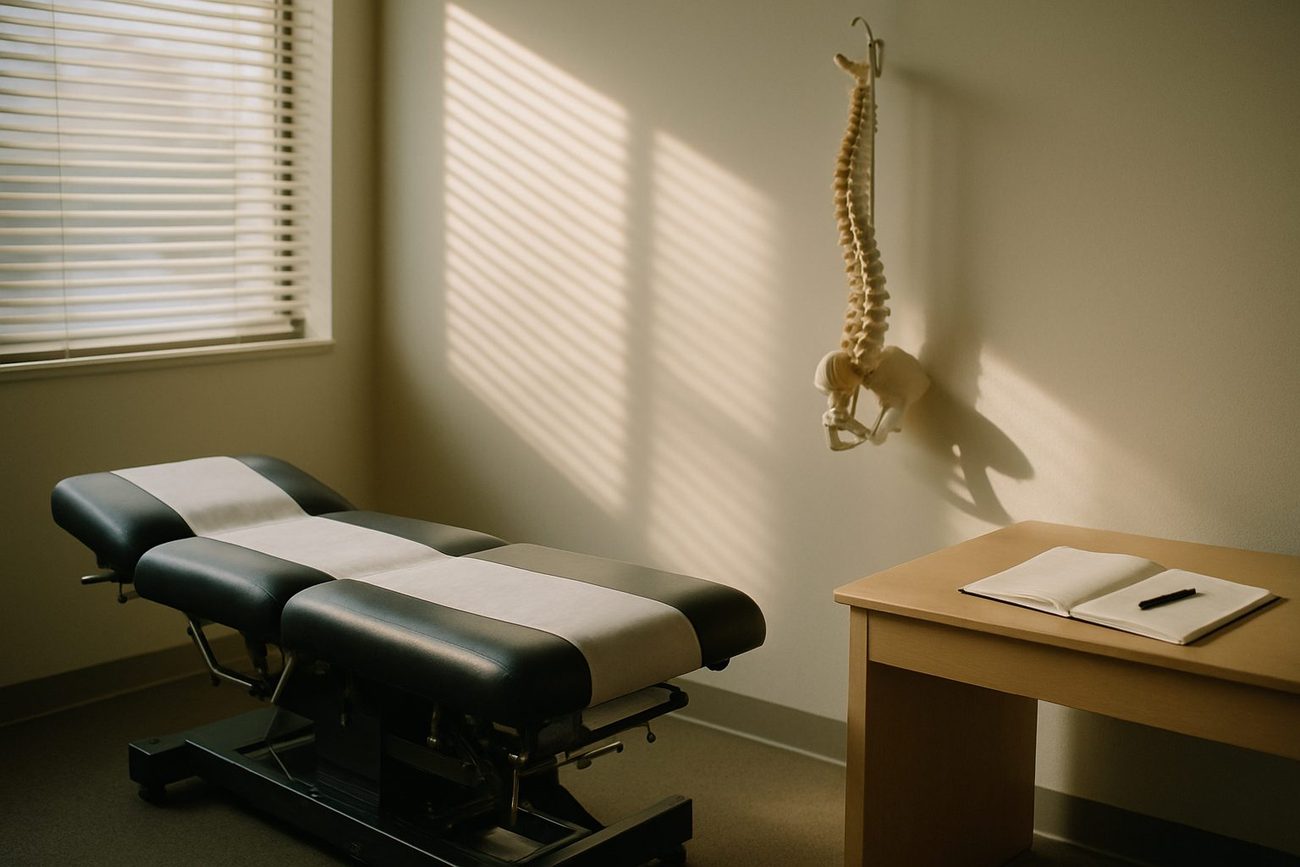
What the clinic publishes for its auto injury lane is diagnosis and a treatment plan after a crash. In practice a first visit in that lane should include a history of the crash, a physical exam, findings written down with a date, a diagnosis if the findings support one, a written plan you can repeat out loud, and a straight answer about whether this is the right office or whether you need imaging, a referral, or a different specialty.
Joseph L. Hollingsworth, DC, runs the clinic and is a chiropractor. The exam is a chiropractic injury exam. If what you need is something else, say so on the phone and let them tell you yes or no before you drive.
What to bring
- The story, in one paragraph When, where, what hit what, how fast it felt, which way your head went, whether you hit anything inside the car. Write it in your phone the night of the crash; by the exam you will have forgotten half of it.
- Your symptoms, with dates What hurt at the scene, what hurt that night, what showed up on day two and day three. The lag file explains why this list grows.
- Anything already on paper A police report number, an ER discharge summary if you went, a list of medications you take.
- Insurance card and identification Ask the clinic directly how a visit is billed and what they accept. This desk does not publish payment terms for a clinic it does not own.
- An attorney's contact, if you already have one Bring it so records can be sent where they need to go. You do not need to have decided anything about a claim before you get examined.
What to say
Be specific and be honest, including about the timeline. If the crash was two weeks ago, say two weeks. If the neck was already a problem before the crash, say that too; a record that pretends otherwise is worth less than one that does not. Ask the questions plainly: what did you find, what is the plan, how long before we should expect a change, and what would make you send me somewhere else. A clinician who can answer those is handing you a record worth keeping.
What you should leave with
A dated note of what was found. A plan you understood. A next appointment or a clear reason there is not one. If imaging or a referral is needed, a name. The record file explains why the date on that first note matters, and what the record is not.
The bright line
Chest pain, a sudden severe headache, weakness or numbness on one side, trouble speaking, a loss of bowel or bladder control, or a head injury with vomiting or worsening confusion is an emergency room trip right now, not a call to a clinic. An injury clinic is built for planned care. If a clinic sends you to an emergency room instead of booking you, that is the system working, not a wasted trip. The triage file walks the gray cases.
Wire // One action
Read enough. Get examined this week.
Call the Tesson Ferry office, say it is a crash exam, and take the first morning or afternoon slot you can drive to.
The bright line. Chest pain, a sudden severe headache, weakness or numbness on one side, trouble speaking, a loss of bowel or bladder control, or a head injury with vomiting or worsening confusion is an emergency room trip right now, not a call to a clinic.
Advertising disclosureThis page is advertising. This desk is compensated for featuring Missouri Injury Clinic, and it is not the clinic, not a law office, and not a party to anyone's insurance claim. We publish only the lanes, offices, and hours the clinic publishes on moinjuryclinic.com. We do not write reviews, rank providers, or give medical or legal advice. Everything on this desk is educational. It is not medical advice, not a diagnosis, and not a substitute for an exam by a licensed clinician.