Key takeaways
- Manchester Road produces the slow rear-end at a signal; 141 produces the higher-speed merge and sideswipe; Clayton and Clarkson produce the left-turn side impact.
- Each mechanism loads the body differently, and none of them follow the size of the dent.
- Every higher-speed or side-impact crash is a concussion question until a clinician says otherwise.
- The 270 ramps are also the route to the near exam room at Tesson Ferry.
Every desk has a beat. The Wire's is a strip of St. Louis County that runs from the 270 interchange at Manchester out to the county line past Ellisville, and north to the 64 corridor through Town and Country and Chesterfield. It is not a big beat on a map. It is an enormous one in miles driven, because West County is a place where nothing is walkable and everything, school, practice, groceries, the office, is a car trip across at least one signal and usually a highway ramp.
This file is what the desk can say about each road from driving it and what each one tends to do to a body. None of it is a statistic. The Wire does not publish crash counts it cannot source, and it does not need to: the pattern is visible from any turn lane on Manchester at five thirty. The sourced counts live in their own file: West County crashes by city has what the Missouri State Highway Patrol recorded inside each city's limits in 2023.
Manchester Road, Route 100
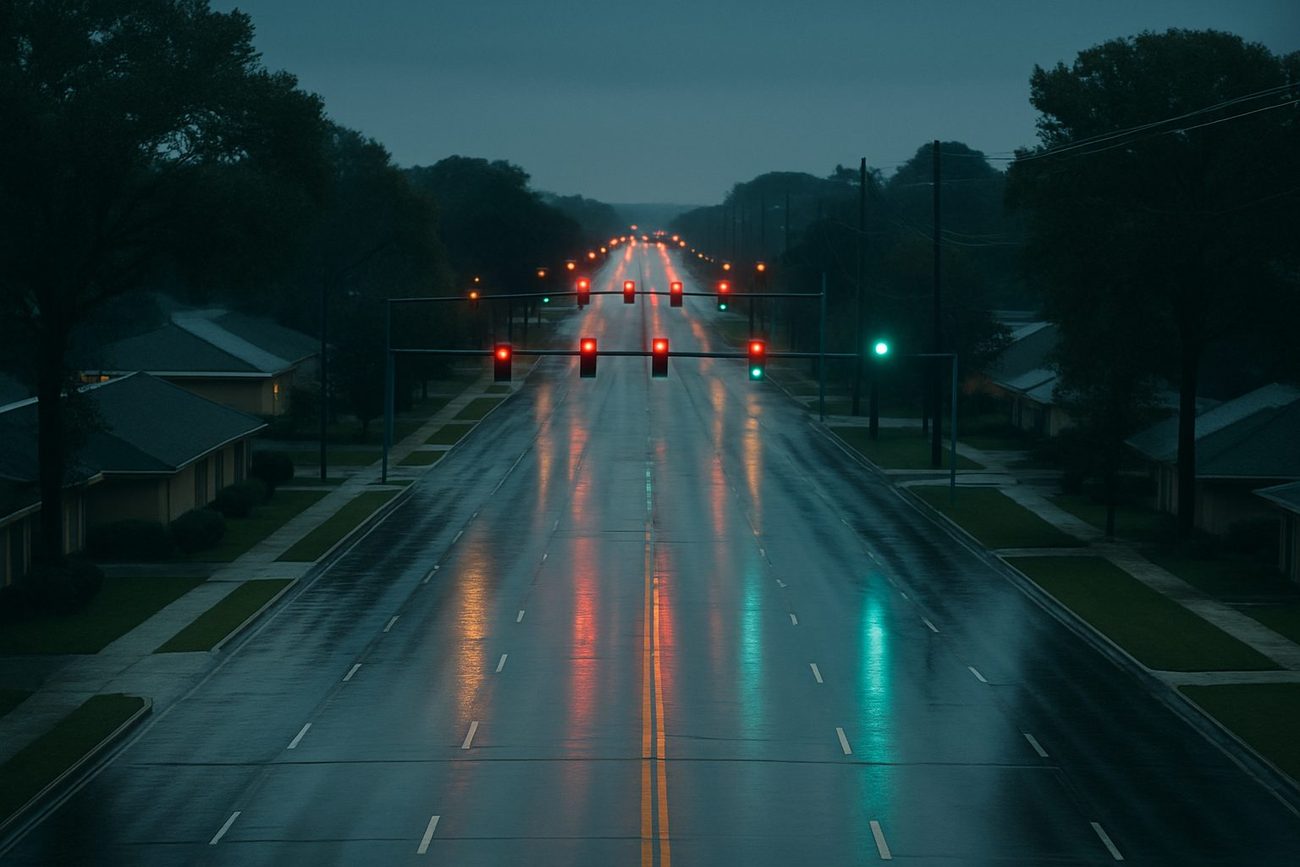
Manchester is the spine. From Des Peres through Manchester, Ballwin, and Ellisville it is six lanes of signals every few hundred yards, center turn lanes that double as merge lanes, and a continuous line of shopping center entrances. The local crash is the slow rear-end: a driver stops for a yellow, the driver behind is looking at the next signal, and the hit lands at fifteen to twenty-five miles an hour.
What that does to a body is specific. The head whips back into the headrest and forward against the belt, the neck goes through a range of motion it was not braced for, and the low back takes the shove through the seat. Nobody bleeds. Both drivers decline the ambulance. The stiffness shows up on day two, and the lag file explains why.
Highway 141
141 is the fast crossing. It carries people from Ballwin and Manchester south toward 44 and north toward 64 and Chesterfield, and it does it at highway speed with short merges at Big Bend, Manchester, and Clayton. The 141 crash is a different animal from the Manchester crash: higher speed, a lane-change sideswipe or a merge that did not fit, and often a second impact as the car is pushed into the next lane.
Higher speed means the same whiplash mechanism with more force behind it, plus shoulder and chest soreness along the belt line, and a higher chance that the head met something. Every 141 crash is a concussion question until a clinician says it is not. The concussion file is the desk's standing bulletin on that.
Clayton Road and Clarkson
Clayton Road runs the quieter, leafier line through Town and Country and Ballwin, and it lulls people. It is two lanes most of the way, with hidden driveways, school zones, and a long stretch where drivers are doing forty-five past houses. The Clarkson intersection at Clayton and the Clarkson stretch south to Manchester are where the corridor produces its T-bone crashes: a left turn across traffic that did not see the oncoming car.
A side impact loads the body differently. The neck goes sideways instead of front to back, the shoulder and hip on the struck side take the door, and there is often a head strike on the window. Side impacts are a strong argument for the exam even when the car looks fine, because the injuries do not follow the dent.
The 270 and 64 interchanges
Manchester at 270, Olive at 270, Dougherty Ferry at 270, and the 141 and Clarkson ramps onto 64 are where the corridor meets the interstate. The ramp crash is a stop-and-go rear-end on the ramp itself, or a merge at the bottom that was misjudged. Speeds vary wildly, from a bumper tap in the queue to a genuine highway hit.
Practically, the 270 ramps are also the route to the exam. Missouri Injury Clinic's Tesson Ferry office sits in South County off 270, and for most of West County that is the near drive. The offices file has the addresses; the clinic's hours are 9 to 6 Monday through Thursday and 9 to 12 Friday at Tesson Ferry, closed 12 to 2.
Big Bend, Olive, and the school runs
Big Bend through Manchester and Ballwin, and Olive through Chesterfield, carry the school-hour traffic: parents in a hurry, teenagers in their first cars, and a lot of stopping in lanes that were not designed for it. The school-run crash is low speed, often involves a young driver, and produces a kind of injury the desk wants to flag: a teenager who says they are fine because the car is fine.
Teenagers are worse than adults at reporting symptoms, especially concussion symptoms, and the adults around them are often the ones who have to make the call. The sending someone file is written for that parent.
What the desk does with all this
The corridor is not going to change. Manchester will keep its signals, 141 will keep its merges, and the left turn at Clayton and Clarkson will keep being a gamble. What can change is what a person does in the twenty-four hours after the hit. The Wire's bulletin is the same for every road on this page: after a real collision, get examined this week, at an office you can actually drive to, and let the findings be written down with a date on them. A documented exam this week protects your health and your options, whatever you decide about anything else later.
Wire // One action
Read enough. Get examined this week.
Call the Tesson Ferry office, say it is a crash exam, and take the first morning or afternoon slot you can drive to.
The bright line. Chest pain, a sudden severe headache, weakness or numbness on one side, trouble speaking, a loss of bowel or bladder control, or a head injury with vomiting or worsening confusion is an emergency room trip right now, not a call to a clinic.
Advertising disclosureThis page is advertising. This desk is compensated for featuring Missouri Injury Clinic, and it is not the clinic, not a law office, and not a party to anyone's insurance claim. We publish only the lanes, offices, and hours the clinic publishes on moinjuryclinic.com. We do not write reviews, rank providers, or give medical or legal advice. Everything on this desk is educational. It is not medical advice, not a diagnosis, and not a substitute for an exam by a licensed clinician.